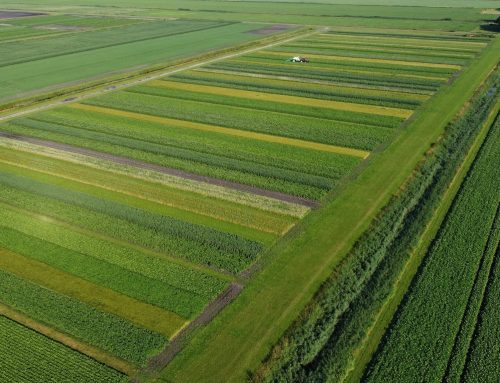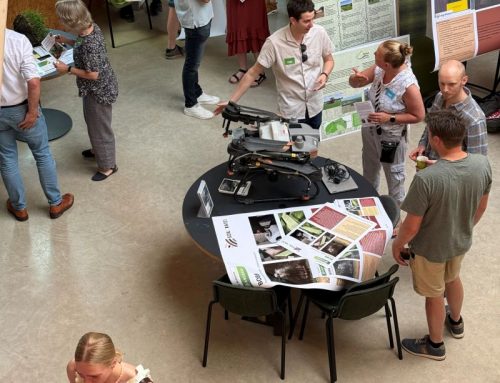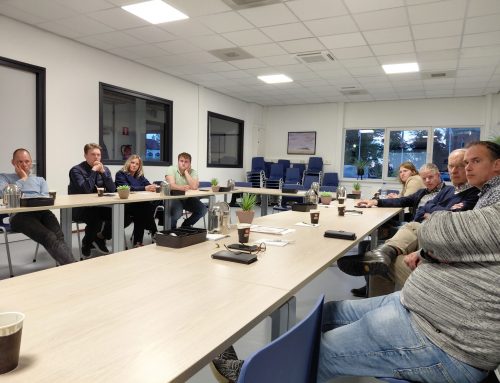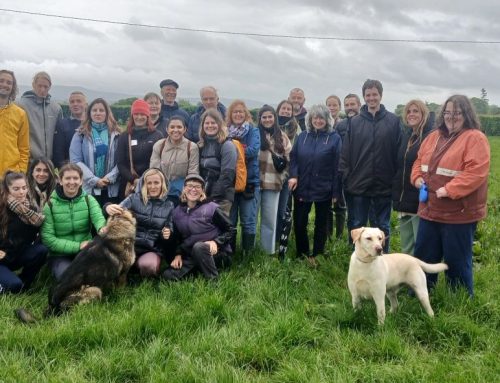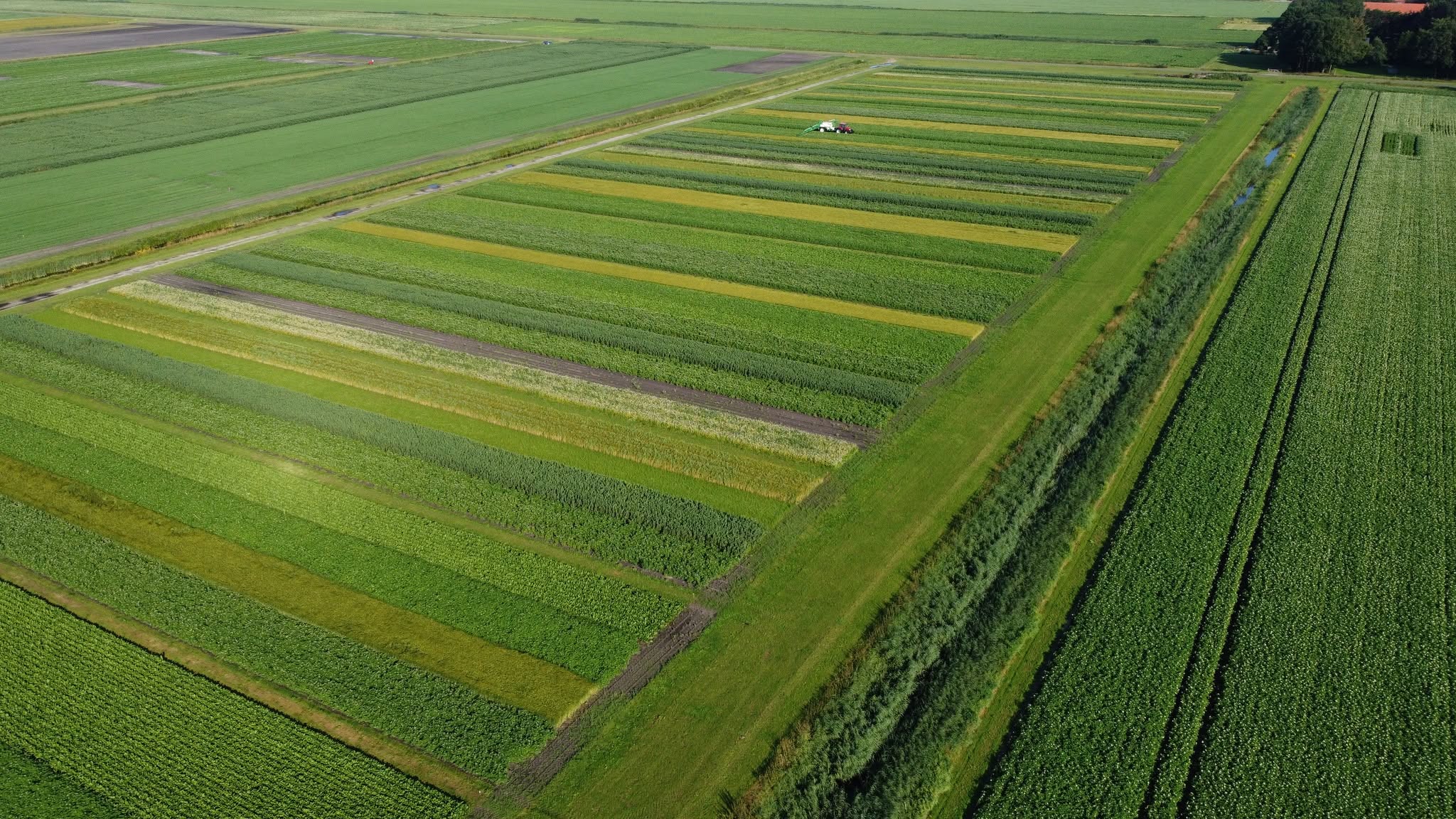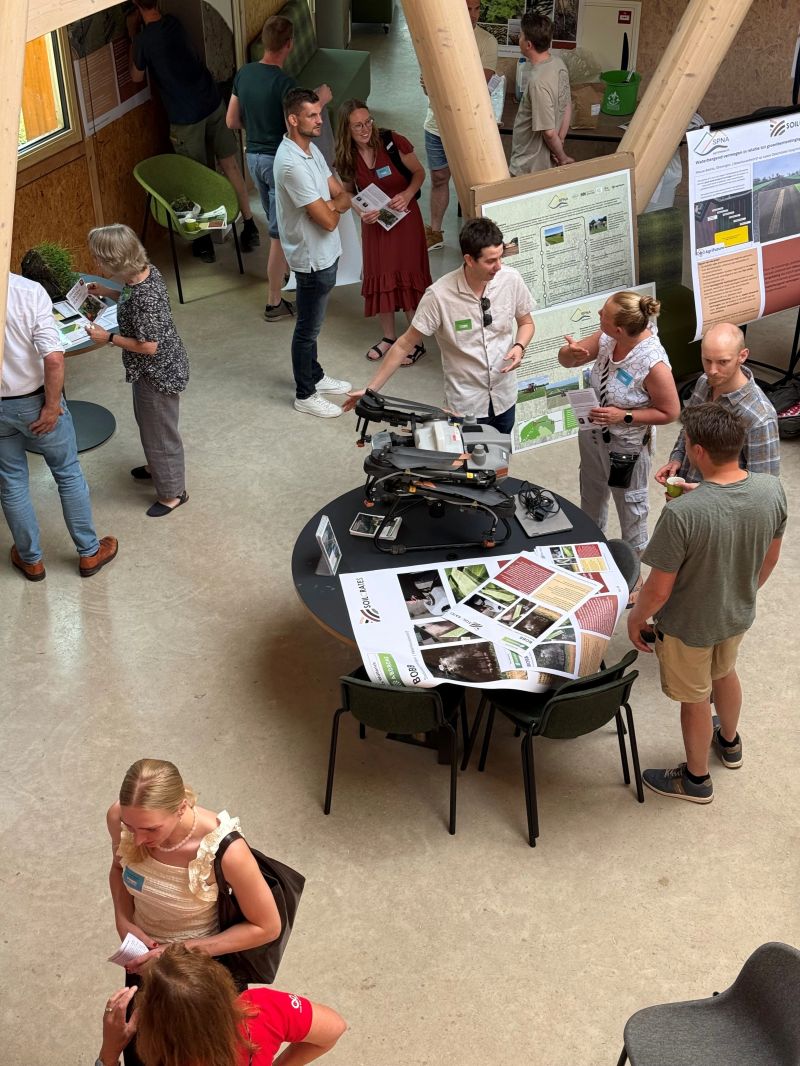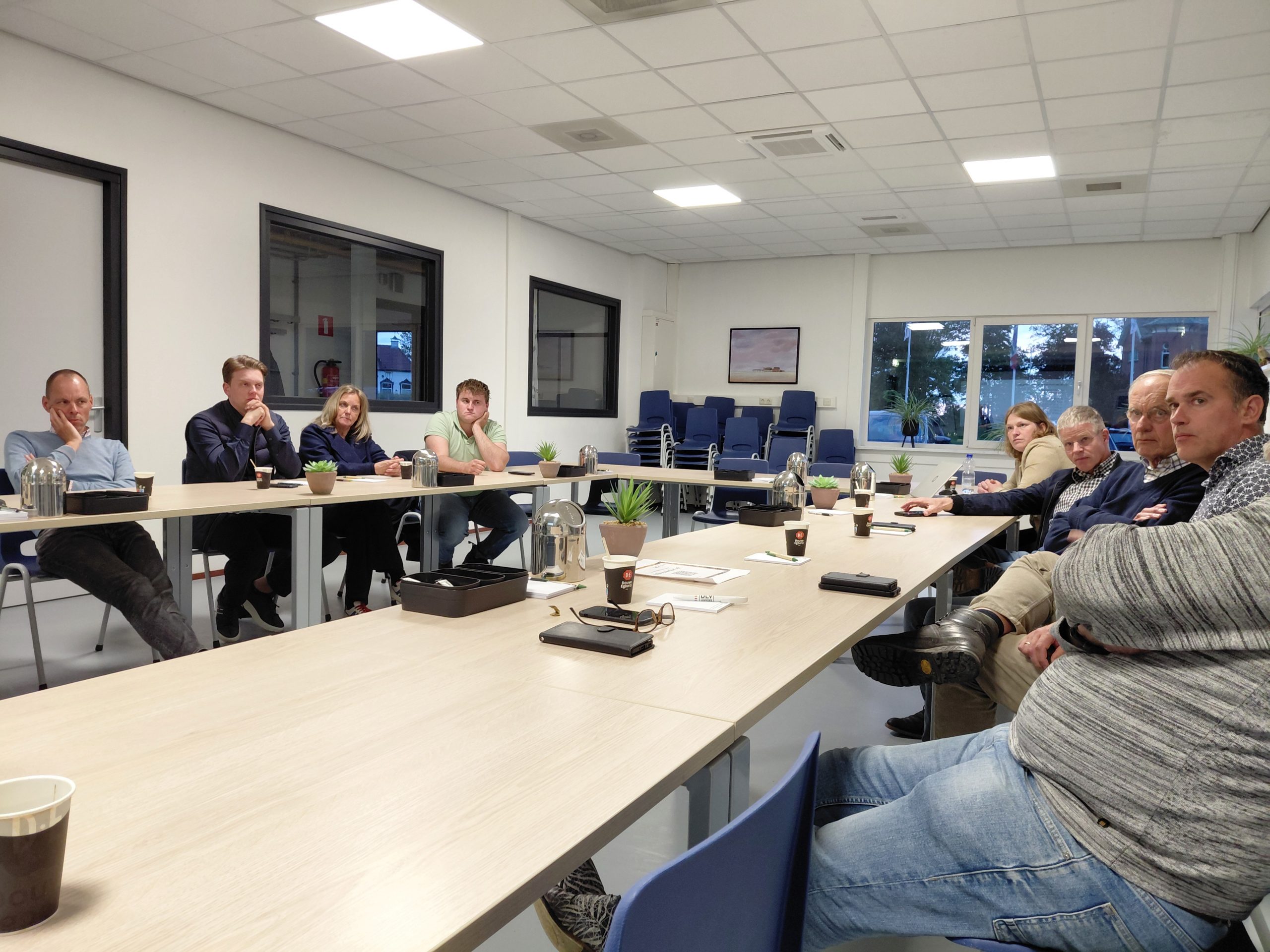
How can we grow pumpkins with less agricultural plastic while taking better care of the soil? That question was at the heart of the field meeting held on 18 September at the Anema family’s Pumpkin Farm in Arum. Around twenty interested farmers gathered at the trial site to observe and discuss the first experiences with living mulch and green ground cover.
The field trial is part of the SOILCRATES project and focuses on developing a regenerative cultivation system for pumpkins. Conventional pumpkin production often relies on plastic mulch to suppress weeds, cover the soil, and create favourable growing conditions for the crop. This trial investigates whether living or mown cover crops can fully or partially replace these functions. The ultimate goal is to develop a practical cultivation system that protects the soil, stimulates soil life, improves water retention, enhances biodiversity, and increases resilience to both drought and extreme rainfall.
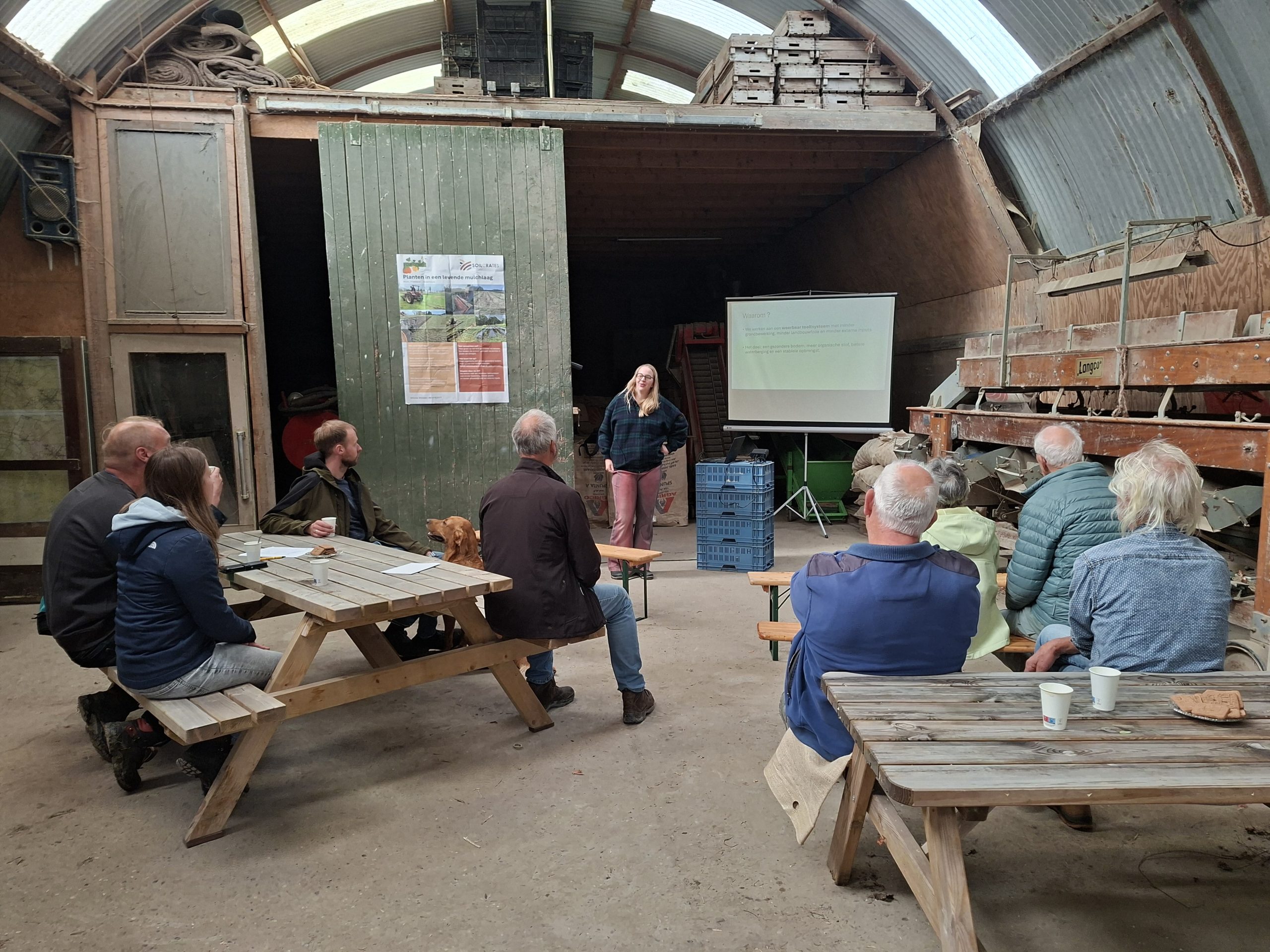
Willeke Weewer introduced the background, experimental design, and the first results of the trial. The growing season immediately provided a challenging real-world test. Due to the prolonged drought during the summer, relatively intensive irrigation was required. These conditions clearly highlighted how the different ground cover systems perform and where further improvements are needed.
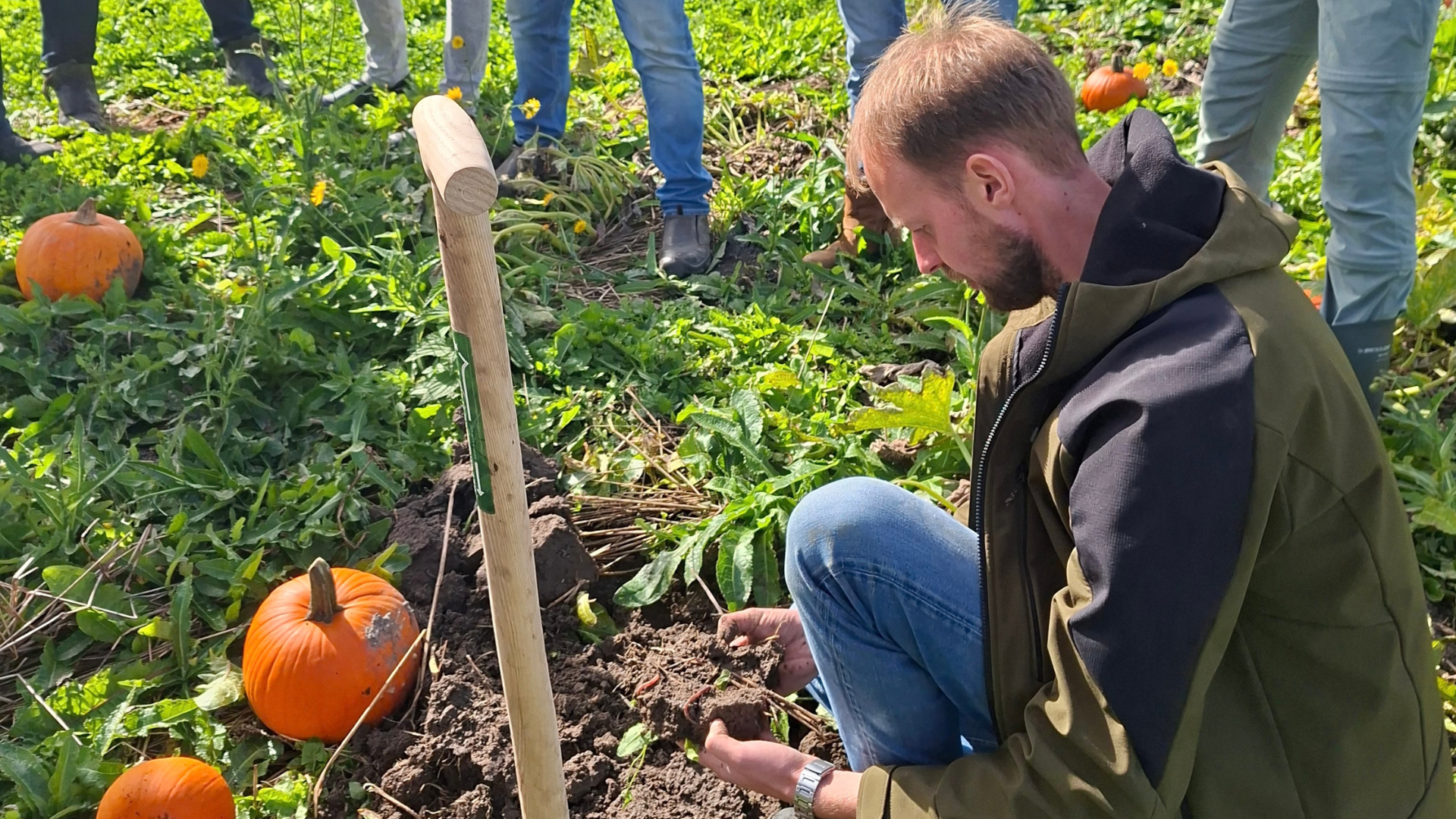
Next, Arjen Anema quite literally took participants through the different trial plots with a spade in hand. In addition to the conventional plastic mulch system, participants examined pumpkins grown in rolled rye and in plots where clover or mustard had been sown. By digging soil profiles at several locations, participants were able not only to assess the crop above ground but also to observe what was happening beneath the soil surface.
The alternative systems produced interesting, though variable, results. Pumpkins grown with mustard, for example, established well—probably because the mustard provided shelter during the early growth stages—but later in the season their growth slowed considerably. The rolled rye effectively suppressed germinating weeds, although perennial sow thistles became problematic. Pumpkin yields in the rolled rye treatment were also somewhat disappointing so far. In most of the alternative systems, pumpkin plants developed a less extensive root system than those grown with plastic mulch. An important point to note is that the plots with plastic mulch were prepared in spring using an eco-plough, whereas the alternative systems only received deep loosening along the planting row to a depth of approximately 25 centimetres.
At a depth of around two to three centimetres, a locally compacted layer or surface crust appeared to be present. Roots tended to bend away from this layer rather than penetrate it. At the same time, the overall soil condition looked remarkably good, with a loose, friable structure and abundant visible soil life. This raised one of the most intriguing questions of the afternoon: why are the alternative systems lagging behind in plant and root development when the soil appears so healthy at first glance?
There is not yet a clear answer, and that uncertainty is precisely what makes this field trial valuable. Several interacting processes may be involved. The availability of calcium and sulphur may be limited, while potassium appears to be present in excess, with possible consequences for soil structure and crop development, respectively. Competition between the cover crop and the pumpkin plants for available nitrogen also cannot be ruled out. In addition, the prolonged drought, irrigation practices (plastic mulch acts like a funnel, directing water towards the plants), and the timing of mowing and sowing the living ground cover may all have influenced the results.
Over the coming weeks, additional measurements will therefore be carried out. Researchers will further investigate soil conditions, nutrient availability, root development, crop growth, and final yields. These data will help explain the field observations and refine the cultivation strategy for the next growing season.
The meeting clearly demonstrated the essence of practice-oriented agricultural research. Not every innovation performs exactly as hoped from the outset, but every observation generates valuable new knowledge. By observing together, asking questions, and exchanging experiences, practical improvements come within reach. The strong interest and open discussions among the participating farmers provided an inspiring foundation for this process. The spade has gone into the ground—and with it, the learning process is now well underway.
by Emiel Elferink & Willeke Weewer