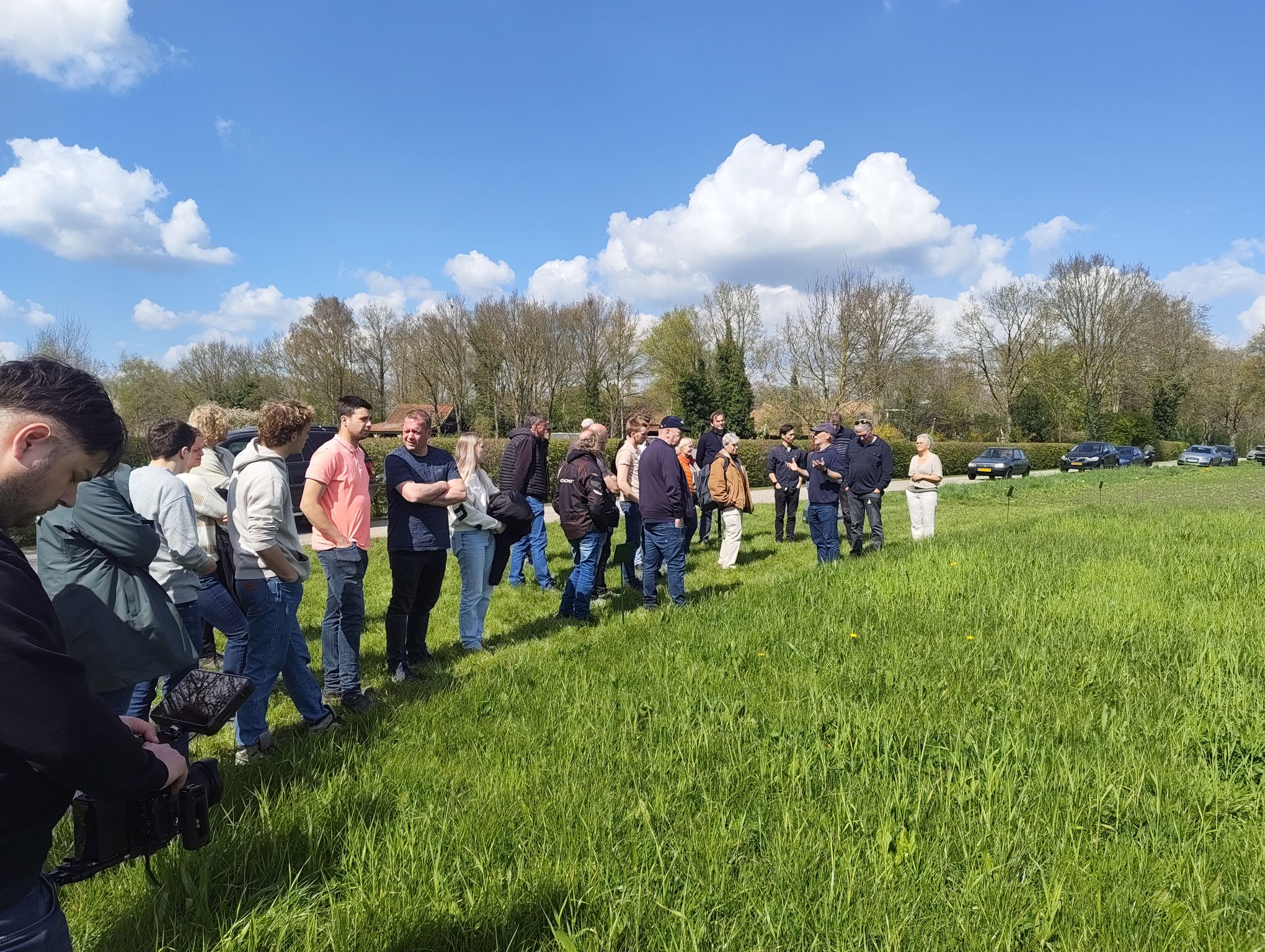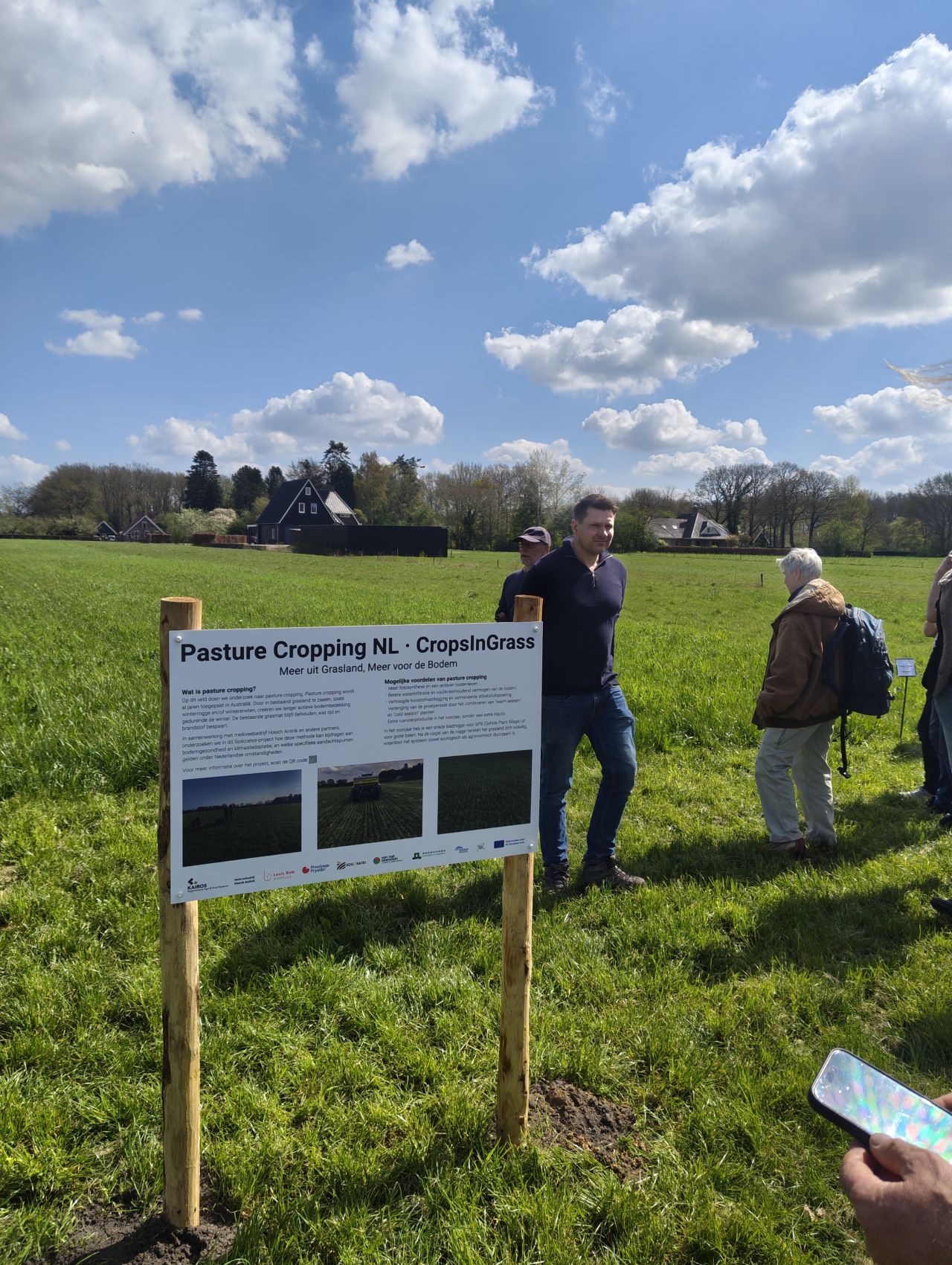
On April 14, the first SOILCRATES pilot demonstration afternoon on pasture cropping successfully took place in Drenthe, marking an important milestone for the project.
The demonstration was hosted across two locations in Zuidwolde and Koekange, where Ajaan Hijmans (KAIROS Regenerative Agri & Food Systems) and dairy farmer Bart Hooch Antink showcased their pilot plots and shared practical insights into pasture cropping.
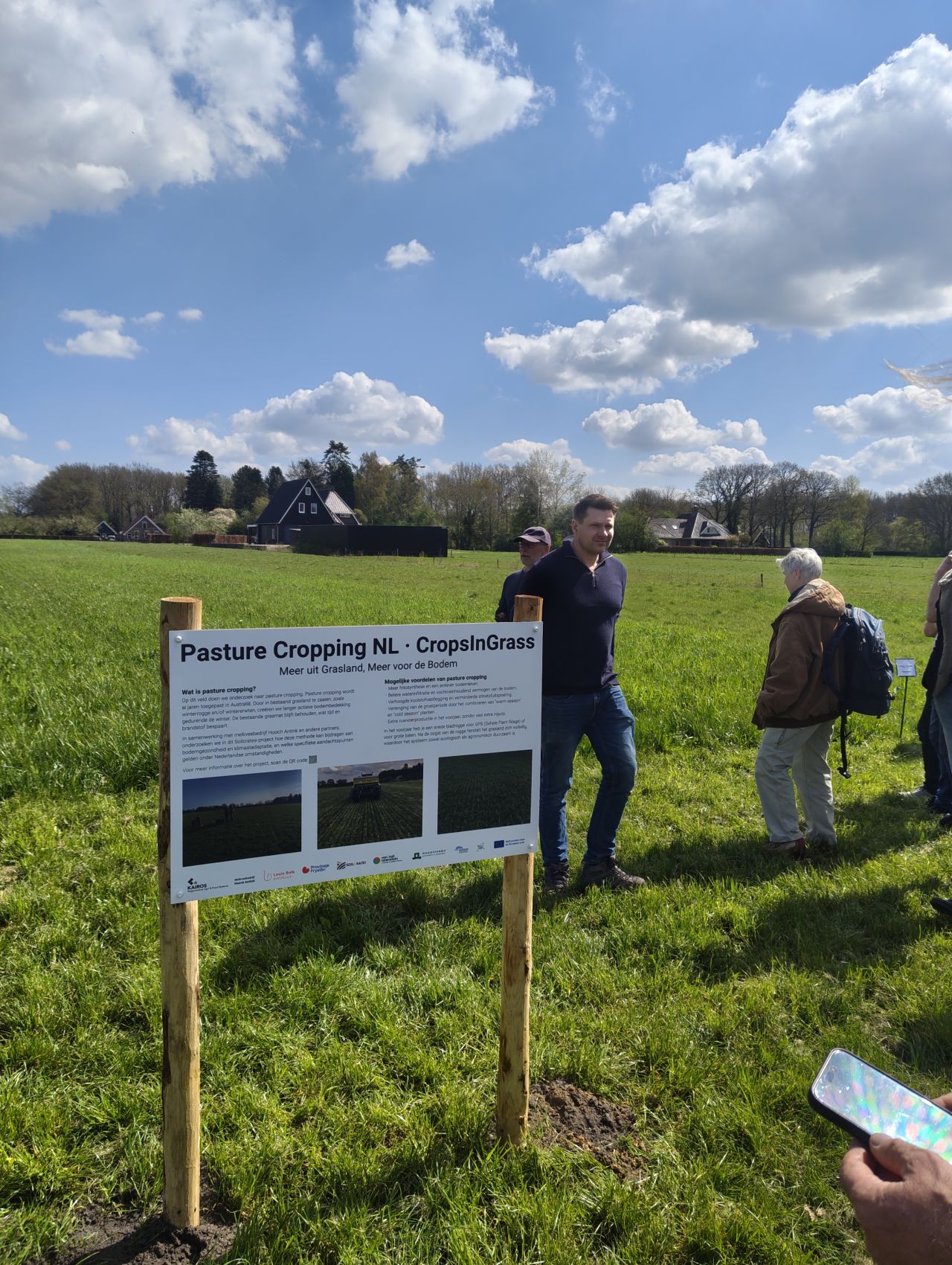
What is Pasture Cropping?
Pasture cropping is a regenerative agricultural practice in which a winter crop—such as winter rye or winter peas—is overseeded into existing grassland. By combining “warm season” and “cold season” crops on the same field, the system extends the growing season and ensures continuous plant cover throughout the year.
This continuous activity in the field is expected to:
- Stimulate soil life through increased biological activity
- Enhance photosynthesis over a longer period
- Improve soil moisture retention
- Increase carbon sequestration
- Reduce nitrogen leaching
- Provide additional roughage production in early spring
All of this can be achieved with minimal additional inputs, making pasture cropping a promising low-impact solution for sustainable farming.
Demonstration Highlights
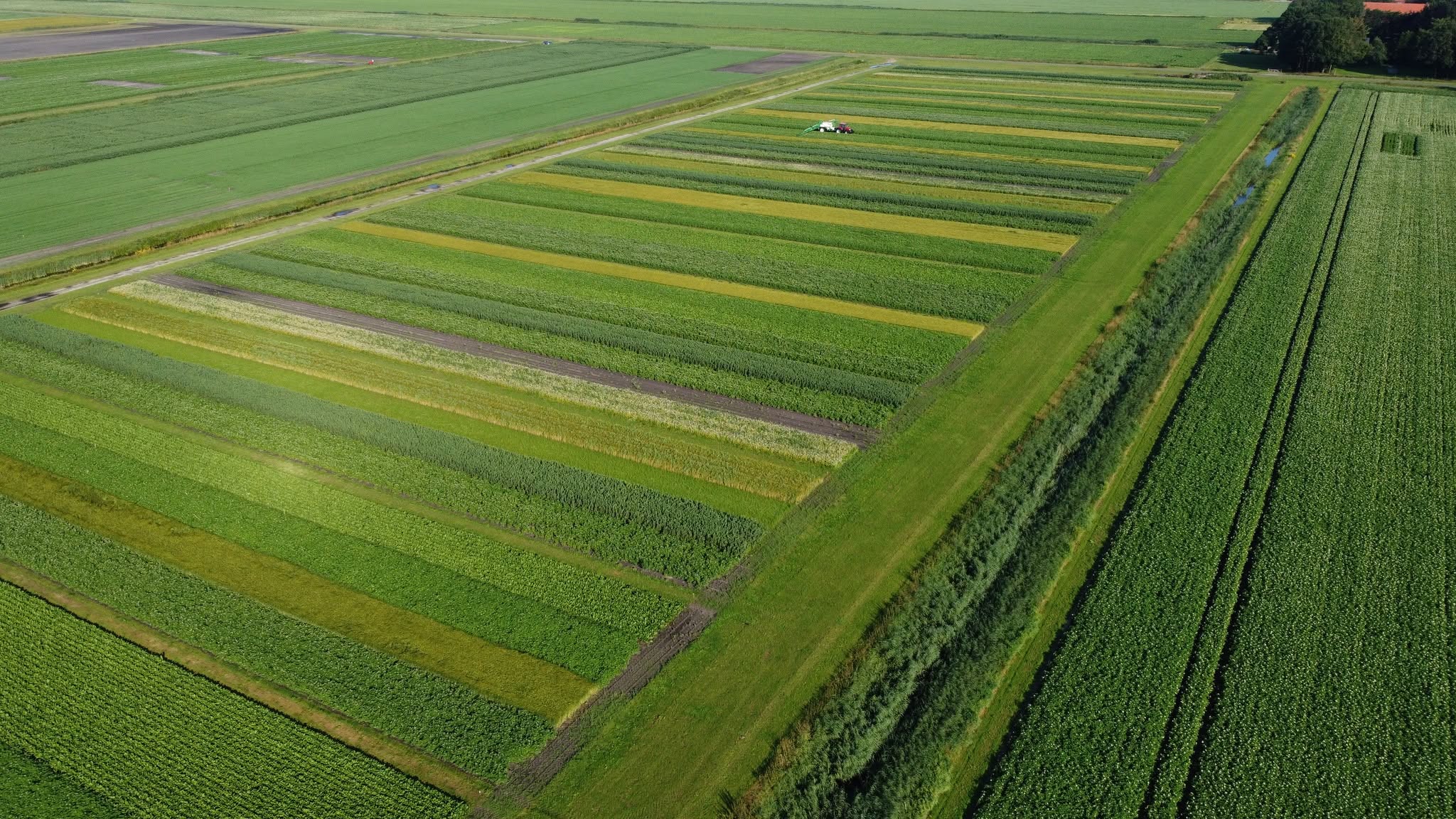
The afternoon began at Ajaan Hijmans’ field, where strips of winter rye and winter peas were already well established within herb-rich grassland. Participants observed how both crops developed in this mixed system and discussed their role in improving soil and forage quality.
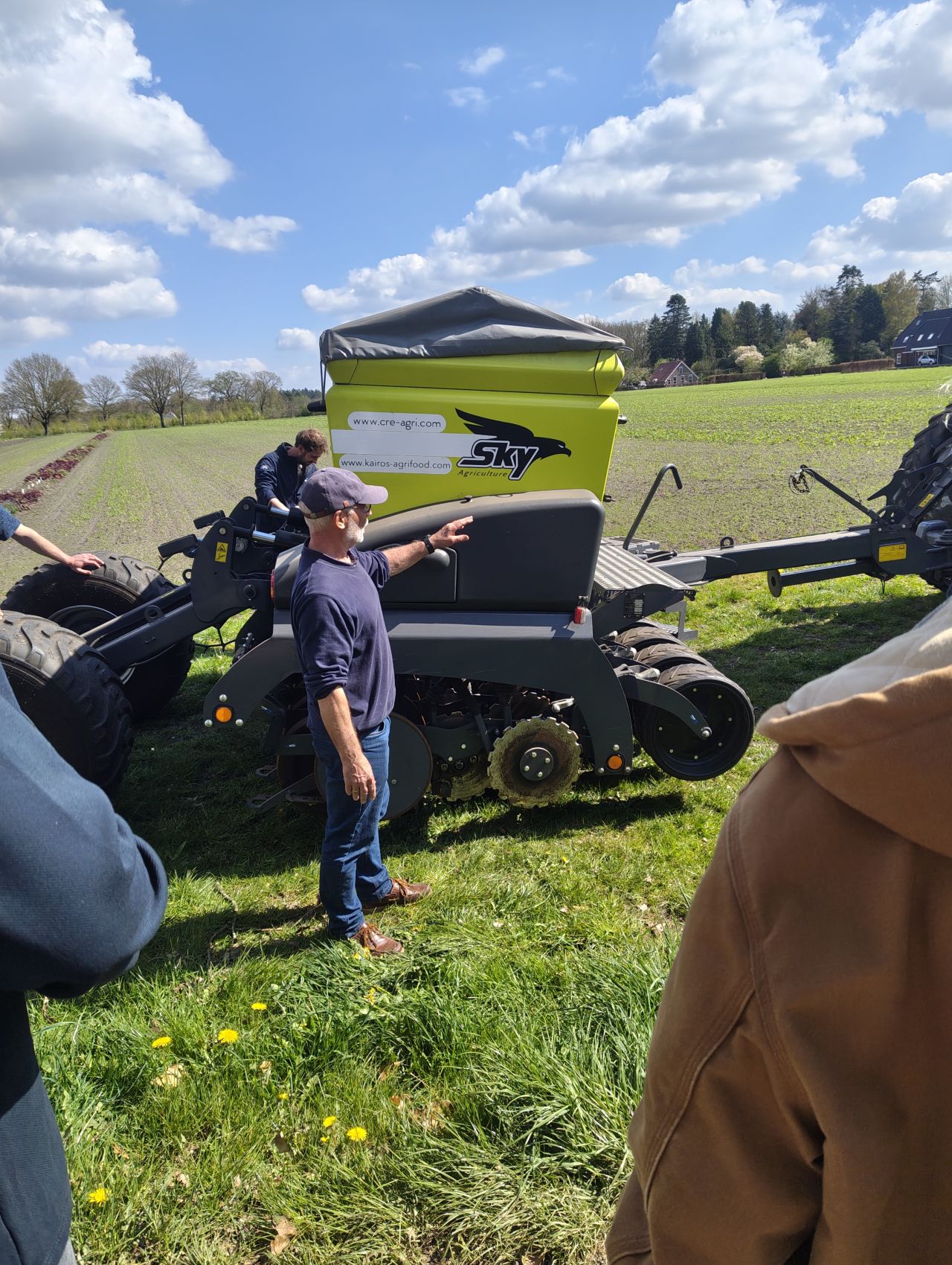
A key highlight was the demonstration of a direct seeder capable of sowing winter rye and winter peas simultaneously in a single pass. This efficient method simplifies implementation and reduces labor requirements. It was also explained that winter rye can be mown regularly, with the first cut after winter, without regrowth complications.
The group then visited Bart Hooch Antink’s field, where similar crops had been introduced into older grassland. Bart shared his expectations for the upcoming harvest, scheduled within weeks, and noted that the nutritional value of the forage will be analyzed.
Looking Ahead
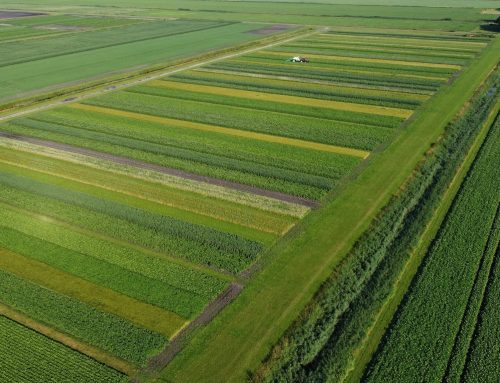
Over the next two years, these pilot plots will be closely monitored by the SOILCRATES Living Lab Northern Netherlands. The results will be compared with control strips to better understand the impact of pasture cropping on soil health, productivity, and environmental outcomes.
This first demonstration sets the stage for a series of upcoming SOILCRATES pilot events across Europe.
Stay tuned for updates and insights from the remaining 12 pilot demonstrations.